skip to main |
skip to sidebar
 Trellis Maximus: The Hippodrome of Istanbul
LOST+ FOUND:
Radical Adaptive Re-use Strategies in Asian Mega-Cities
This blog covers research and speculation from the 2005 Rotch Scholarship year abroad. The focus was on radical forms of heritage and adaptive re-use in Asian mega-cities, specifically Istanbul, Mumbai, Bangkok and Tokyo. In each location distressed built artifacts were sought out and envisioned with interventions that adapted them to new forms of urbanity. The inquiry addresses six instances of history lost and found, from the vanishing Hippodrome of Istanbul to the contemporary ghost-skyscrapers of Bangkok. The result is a fresh look at the concept of architectural heritage in light of the pressures facing Asia's mega-cities. The chapters of the study are on the sidebar to the right. Courtyard Cricket: The Bollywood Cinemas of Bombay
Next stop: Introduction
-or- skip Intro: go straight to Istanbul.
Courtyard Cricket: The Bollywood Cinemas of Bombay
Next stop: Introduction
-or- skip Intro: go straight to Istanbul.
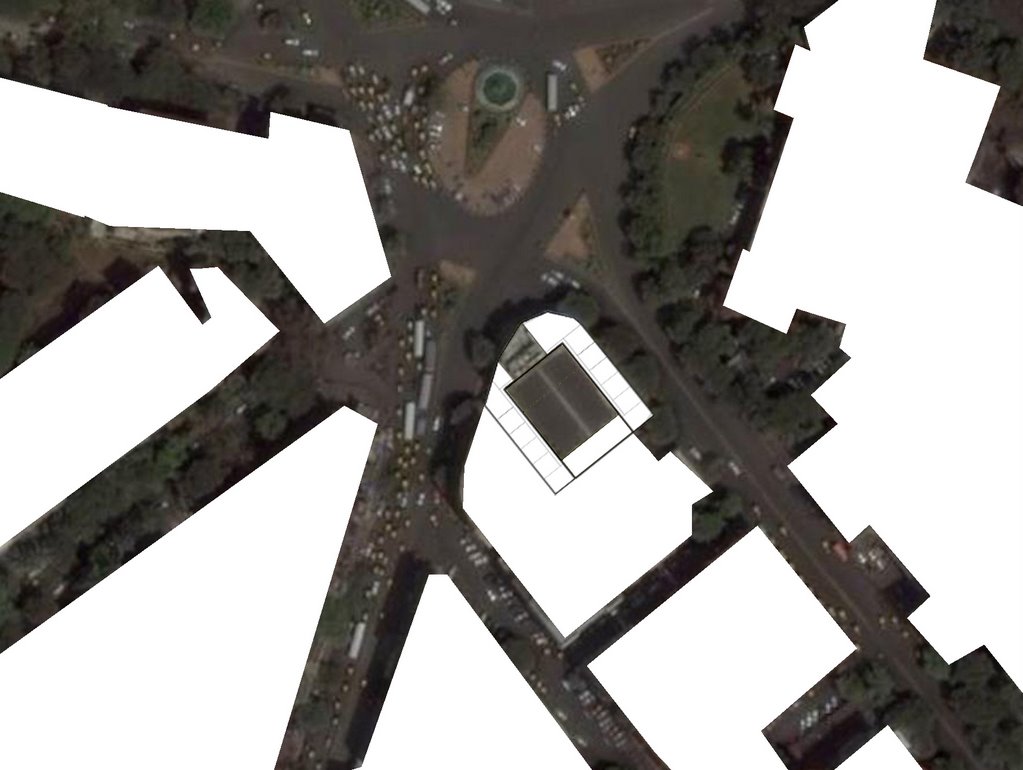
CINEMAS: SITE  Map indicating private use (white) and civic (color)
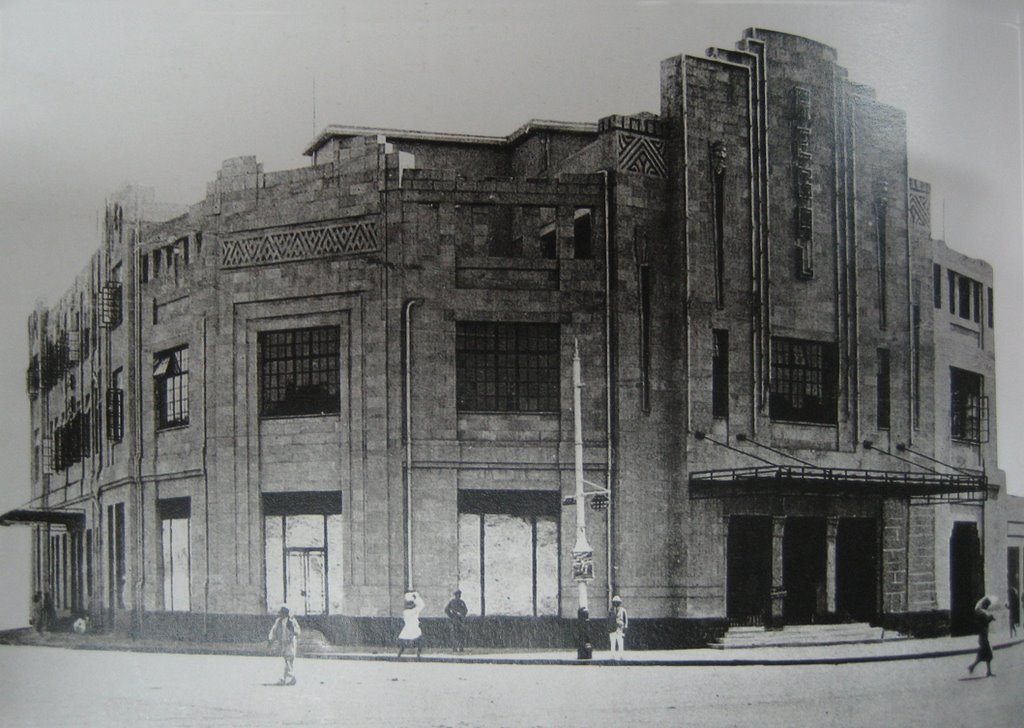
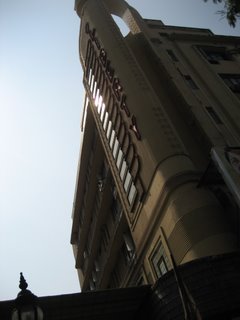
The Regal in Colaba started the original cinema building boom and defined the Bombay typology. At the time of its opening in 1933 it was the height of modernity, and a civic jewel to match the Prince of Wales museum across Wellington Circle. Today the auditorium is rarely even half full. Like other theaters of this type it has a grand entrance and multiple story lobby reflected in the marquee detailing of the facade. Flanking the entrance, ground floor retail occupies the street, with one to two additional stories of offices and apartments depending on the side. These additional program elements wrap and protect the auditorium from the noisy streets outside and present a transitional zone to the neighboring urban fabric. There are 1200 seats in the audience chamber with one balcony, and the screen itself is set within a proscenium and small stage. The interiors have all been re-done since the original Art Deco design in a much less opulent style.
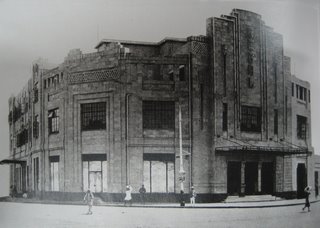
The Regal, like many of the Art-Deco cinemas, is heritage listed. Its particular listing requires the exterior of the building to remain unchanged, while the interior and program can be renovated. The tendancy is for the cinemas to be gutted and converted into upscale shopping centers, taking some marginal advantage of the large open space. But retail has no problem finding an outlet in the city; it grows like kudzu, filling in leftover, forgotten and negotiated space. Can there be a profitable solution that revisits the quasi-civic and social role that cinema once fulfilled?
ASIDE: JOIN THE BLUE BILLION

Cricket is officially more popular than Bollywood according to a recent Times of Bombay online poll: it was chosen 55% to 45% as the “new religion of India.” However questionable the methods, it is an indication of the rise of cricket. Within ten years it has gone from a gentlemen’s’ game among former colonies, to a $10 billion enterprise where cricketers rival movie stars in celebrity status. Recently the Indian national team, with Pepsi, has unveiled a new ad campaign starring mega movie star Shah Rukh Khan with the tagline “Join the blue billion,” a shocking reminder of the size of the fan base/market. However, as popularity for the sport has grown, the number of places to play has not.
In Bombay, the acceleration of population has led to a corresponding loss of open space. There is less than one square meter per person, compared with a recommended 16 sq. m/person. Most of this is found in the bundle of town greens called maidans in the old Fort area, only some of which are open to the public. Public gardens have extensive restrictions that rule out anything beyond walking and sitting. Elsewhere in the world the rise in urban population and lack of open space has meant a similar rise in urban sports. The ascendency of basketball as a world sport is only one signal of the shift from rural to urban. Thus it is not surprising to see the invention of indoor cricket, though still in its infancy, complete with a governing board and codified system of rules.
ASIDE: VERANDAS 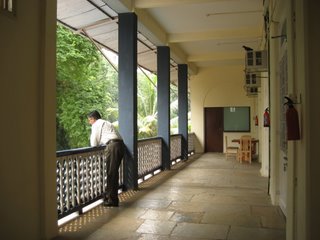
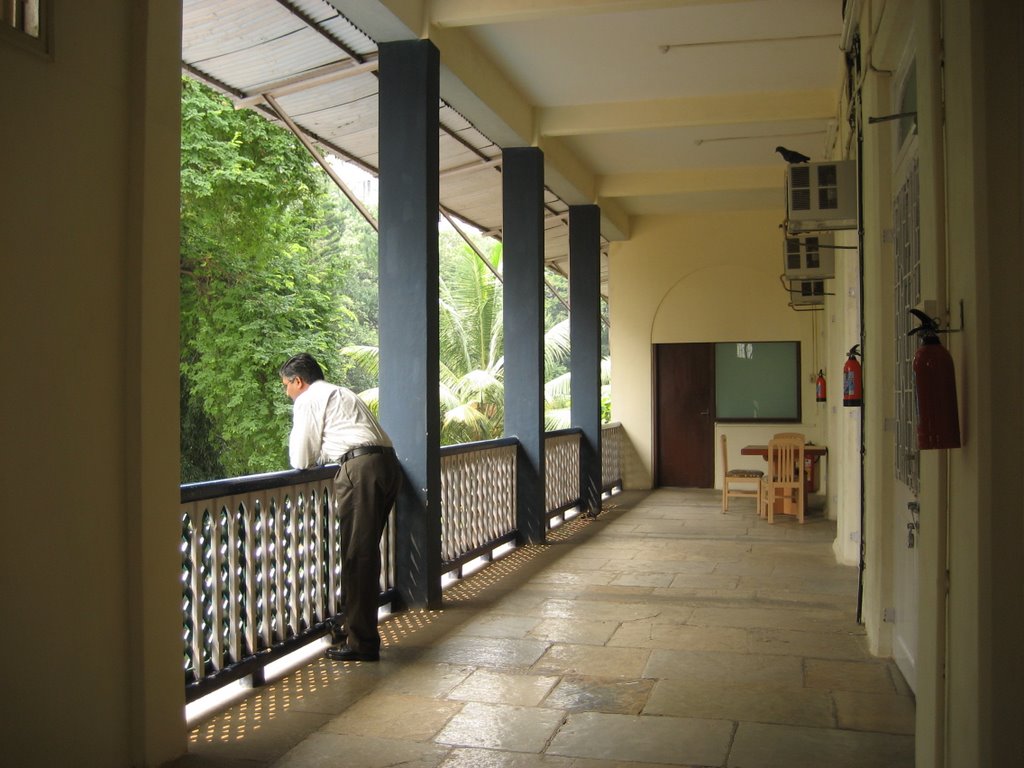
Bombay’s most widespread architectural feature is the verandah. Arguably a Hindi word in origin, verandahs were developed in the Indian subcontinent as a response to heavy monsoon rains and hot, humid summers. Indigenously they covered ground floor patio spaces but have evolved into any of the deep, semi-screened balconies that surround buildings. In the chawl multi-family housing typology it is also the means of circulation and primary socializing area. They are, in effect, like front yards. Laundry is hung, plants are put out, and little shrines are erected. Often each zone will be painted a different color to indicate ownership.
It is also where the line of cleanliness begins. In a city with little municipal cleaning, the public areas reach a neglected griminess that looks and smells of pollution, trash and sewage. But personal spaces, beginning at the verandahs, are spotless. Great care is taken in maintaining the order and aesthetics, since it is the most public aspect of the household. They are also the best place to watch street theater. The railings are just the right height to lean on and watch the crowds go by. Removed from the pressing flow, dirt and noise below, they offer a rare moment in the city where you can gain some perspicuity. Open to one side and “owned” by the other, they are simultaneously circulation, front yards, and opera boxes.
CINEMAS: CRICKET/COURTYARD/HOUSING 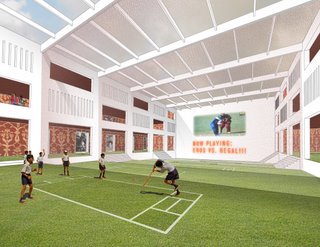
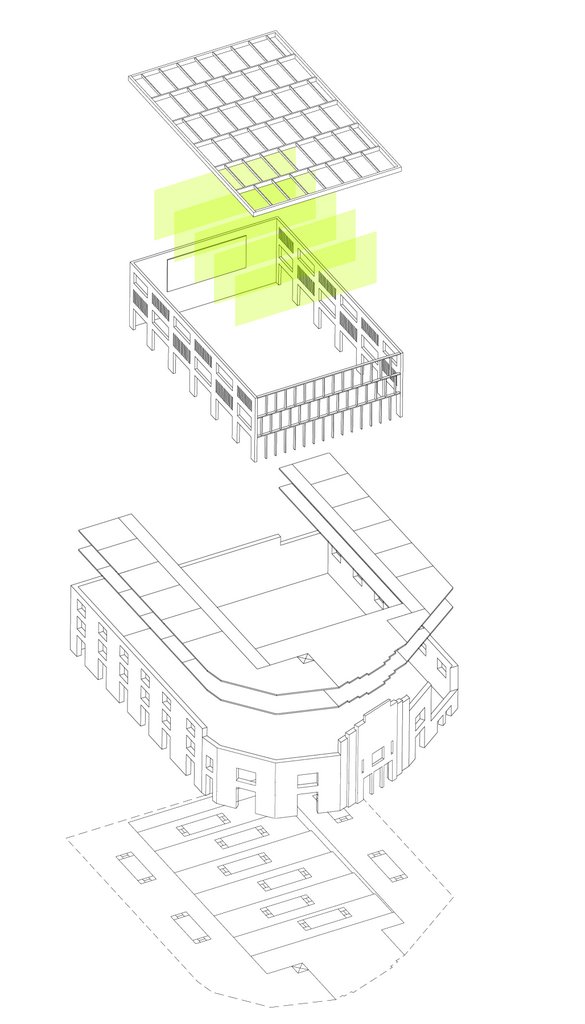
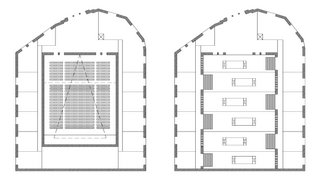
I propose a new hybrid cricket courtyard/courtyard housing typology. It would combine indoor cricket fields called pitches set in a courtyard surrounded by housing. The raked auditorium would be “terraced” into individual pitches and covered with turf and rented out by the hour. Ground floor retail would additionally be converted into pitches, allowing street views into the games. With a new glazed roof structure cricket can be played all year long, even during the four months of monsoons.
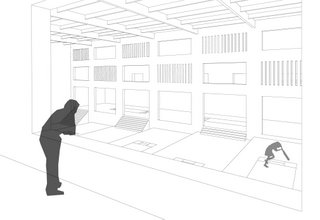
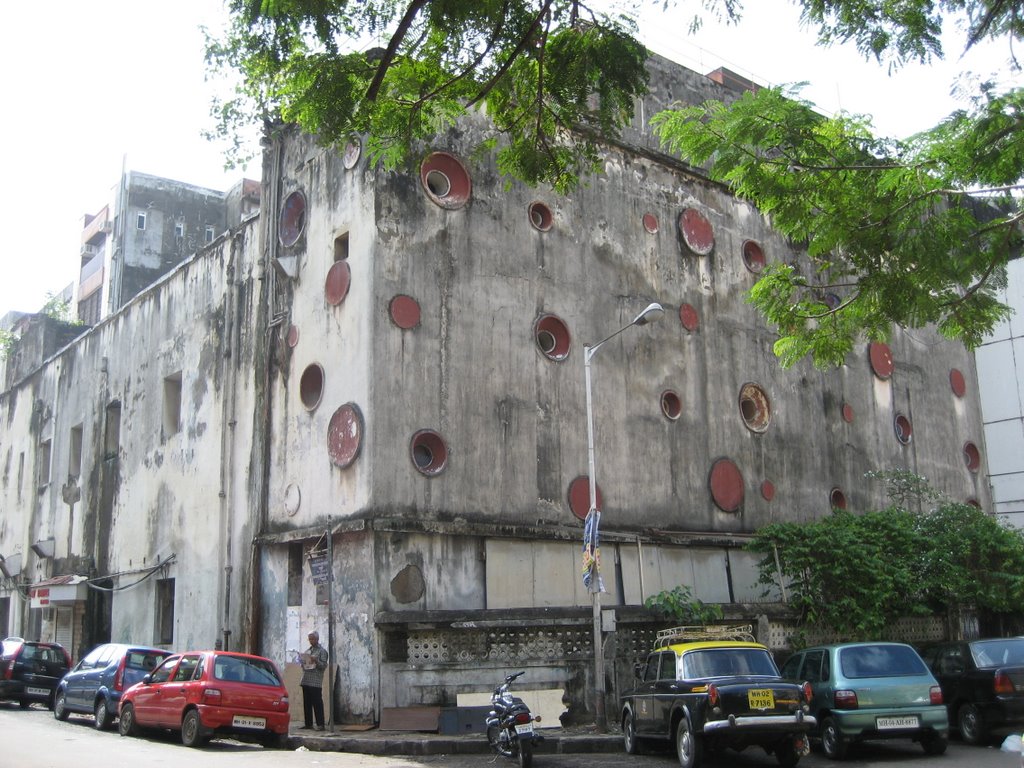
The existing housing would turn inwards for views of the light-filled courtyard, no longer at odds with isolation requirements of a movie theater. By carving up the acoustic shell around the auditorium, a new verandah would be created where there was previously an enclosed hallway. The verandah would overlook the games below; tenants would become figurative stewards of the courtyard. The residents would have access to the pitches during nighttime hours, thereby encouraging more ownership over the shared space. The existing lobby for the theater would become a cricket oriented leisure enterprise with food, drinks and a viewing area. Since it is already the public face of the building, it would retain its role in drawing people in and exhibiting the action.
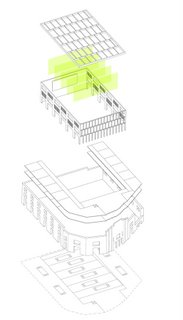
1. Terrace the auditorium in coordination with the structure. Convert the terraces into rentable indoor cricket pitches with turf. The pitch can be closed during certain hours to allow residents access. It can be rented out for weddings and other events.
2. Preserve the existing facade and floor plates. Develop the lobby into cricket related leisure zone. Retain screen and projection booth for displaying games taking place inside; anyone can be a star! For important screenings of national team matches the terraces can be converted into a viewing hall.3. Punch through the auditorium shell, creating a verandah out of the existing hallway. Add stairways that act as seating for watching games.
4. Add color coded movable netting between pitches. Take advantage of Bombay’s newly relocated and modernized textile industry.
5. Replace opaque soundproof roof with transparent glazed courtyard structure. The courtyard can be used throughout the monsoon season.
 Next Stop: Bangkok
 CINEMAS: BACKGROUND
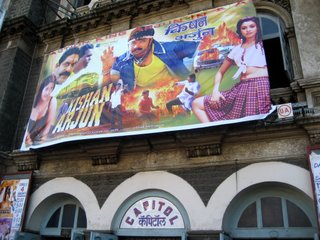
Going to the cinema was historically one of the strongest collective links in a diverse and segmented nation. Families eagerly anticipated Fridays when the latest Bollywood offerings would be released. The notoriously rowdy cheaper seats were up front, while more genteel patrons could pay more for the balcony seats. Audiences would often watch their favorite films dozens of times, singing along and providing commentary during the screenings. Films that were really big might play continuously at a single screen theater for years. The cinemas fulfilled a quasi-civic role, providing a community escape that was simultaneously anonymous and unifying. In a nation and city comprised of so many disparate cultures and their attendant communalist (in the Indian usage of the word, “sectarian”) conflicts, it is rare to find this common ground.

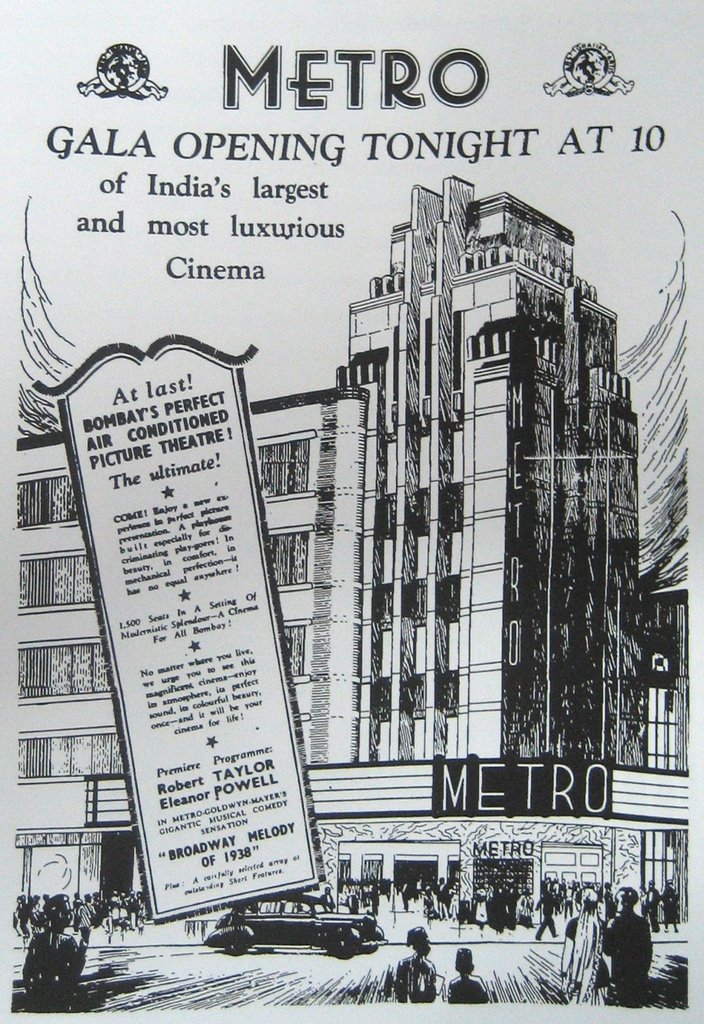
The classic era of cinema design was the 1930’s. During this decade, Art Deco imported from Continental Europe and the United States was the preferred style. Theaters embraced this decorative modernism, becoming subtle symbols of a modern, independent India. On one end of Marine Drive the Regal was showing the great Indian myth-building epics of early Hindi cinema, while on the other end Gandhi was finalizing his self-rule and resistance doctrines. A succession of ever more sexy theaters opened from 1933 to 1938 in the most opulent period of building: The Regal, The Plaza, The Central, The New Empire, The Broadway, and culminating in the 2000 seat Eros across from Churchgate Railway Station. Each featured car parking, elevator lifts, air conditioning, and the latest audio-visual equipment. They were technological marvels covered in streamlined wrappers. Additionally, ground floor retail and housing above would provide supplemental income for the owners, while matching the scale of the neighboring buildings. Openings were not just to watch the movie, they were events with elephants and lights and glamour. Single screen construction continued through the 1960’s, incorporating contemporary fashions in their aesthetics, though tempered by India’s “self-reliance” policies. These later theaters combine a sort of space-age bachelor pad look with the local brand of socialist-realist construction. Notably, the Bombay typology of combining apartments and retail with the theater also continued.
Bombay was the natural backdrop for many films, especially in the post independence era. If the script called for new or modern, they shot Marine Drive; elegance was done at the Taj Motel; lushness was captured in the Oval Maidan; seediness in the backstreets of the cabbies. Films became a sort of propaganda for lifestyle and location, notably the burgeoning metropolis of Bombay. Of course the films were based on and shot in the city, but run through the fantasy factory of filmaking. The city was projected on screens across the nation; it is at least partially responsible for migrants relocating to the mythical city, especially the young runaway boys. Bollywood was a central player in selling the story of a progressive India, and often it took the shape of Bombay.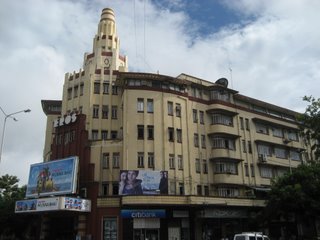 Bollywood productions are increasingly commodified, no longer reliant on “real” Bombay as a setting. Now most shooting is done abroad or on tightly controlled sets in the north of the city. Also evident is a shift in focus from the dream of a modern India to the dream of an affluent one. The new target audience is the 20 million NRI (Non Resident Indians) living abroad, particularly in London and New York where ticket prices can be ten times that in India and there is more disposable income for associated products. NRI revenue now accounts for 65% of the returns. Marine Drive in Bombay used to be the iconic location of emerging India; argueably it is now any given swanky London night club.
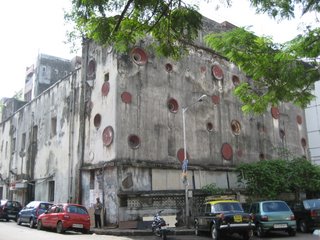
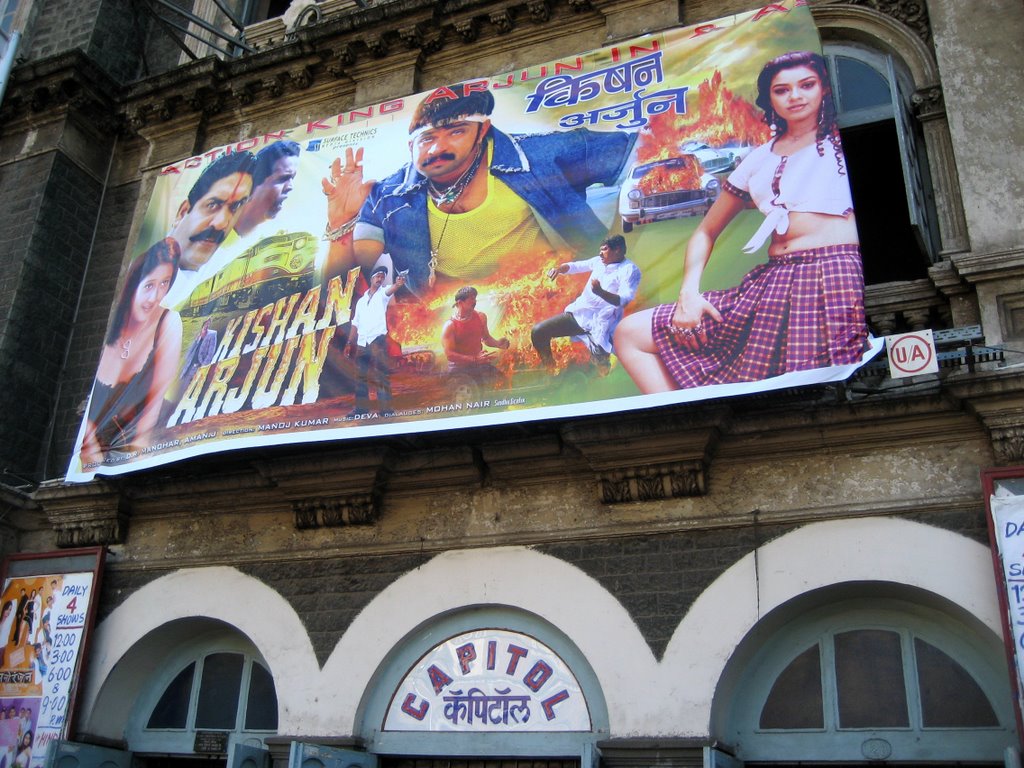
Today single screen theatres are obsolete and closing at an alarming rate. Since 1983, over one third of the 160 or so single screen theaters have shuttered. Multi-screen theaters are increasingly bigger and more diverse to lure patrons that might otherwise watch videos; alternative leisure activities are a requirement to justify the night out: restaurants, stores, bars, cafes, etc. Thus the mall is a more ideal economic location for the theater, where the hermetic environment can capture more revenue than any single activity. Often the movie itself is only a fraction of the overall revenue. Additional tax breaks by the state government compound the trend, as multi-screen cinemas are exempt the otherwise very high entertainment taxes (around 50% of the ticket price). Single screen theaters simply don’t make enough money to thrive, much less renovate. Some have enough nostalgic value (Eros, Liberty) to gain a reprieve, but how long can it last? Unless the theater is full most of the time, it cannot keep up. Thus they tend to play blue chip movies without venturing into more experimental or independent territory. Lacking revenue to renew and refurbish the theater the quality erodes. It might slink into B-movie action/sex films, or just fade into the fabric with shops or squatters taking over the lobby, as in the Strand.
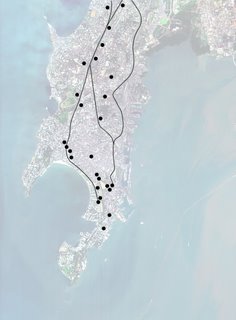 Map of Bombay indicating railway lines and cinema locations
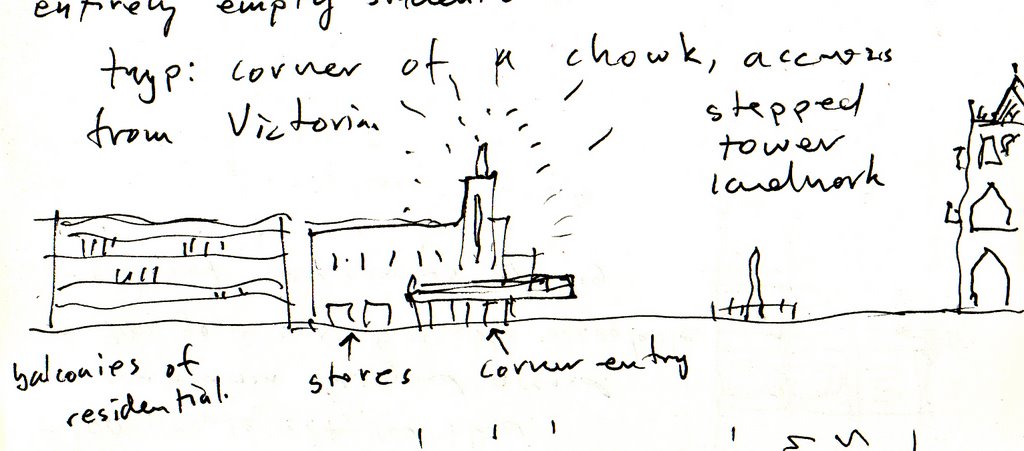
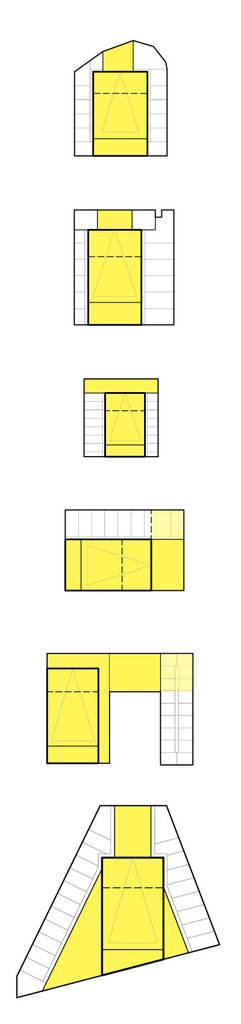
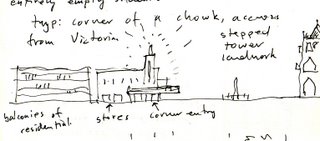
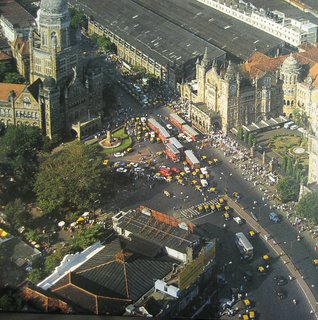
Viewed simply as objects, the theaters are unique in the city for two important reasons: location and shape. First, they occupy a privileged lot in each neighborhood, often associated with a railway station. A typical theater will be located on or near one of the corners of the city’s chowks (major intersections), along with municipal buildings and train stations. Second, they present a large volume of space inside a recognizable landmark. Most theaters have prominent towers above the marquee corner entrance, with shops and apartments that turn the corner and provide a smooth transition to the neighboring fabric. They are simultaneously sensitive and narcissistic. Inside, the auditoriums hold from 800 to 2000 seats with large open spans and typically one balcony; they are wombs away from the teeming streets outside. Today there are often insensitive additions in order to make up for the lost revenue: apartments, offices, and other unidentified boxes that help offset the cost of the movies.
 Plans of various cinemas indicating theater (yellow) and apartments (white)
 Next stop: Courtyard Cricket